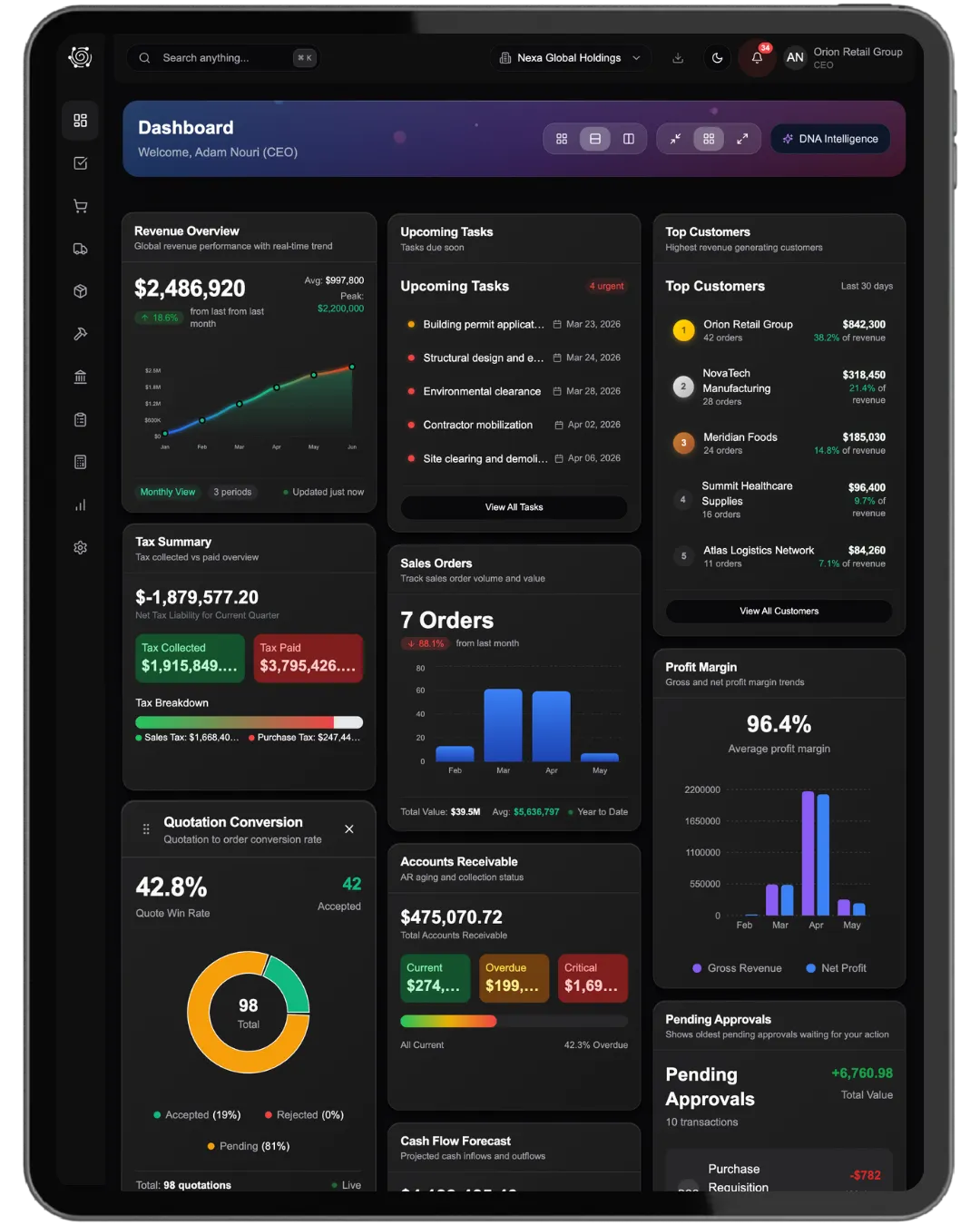
Custom furniture ERP for materials and customer orders
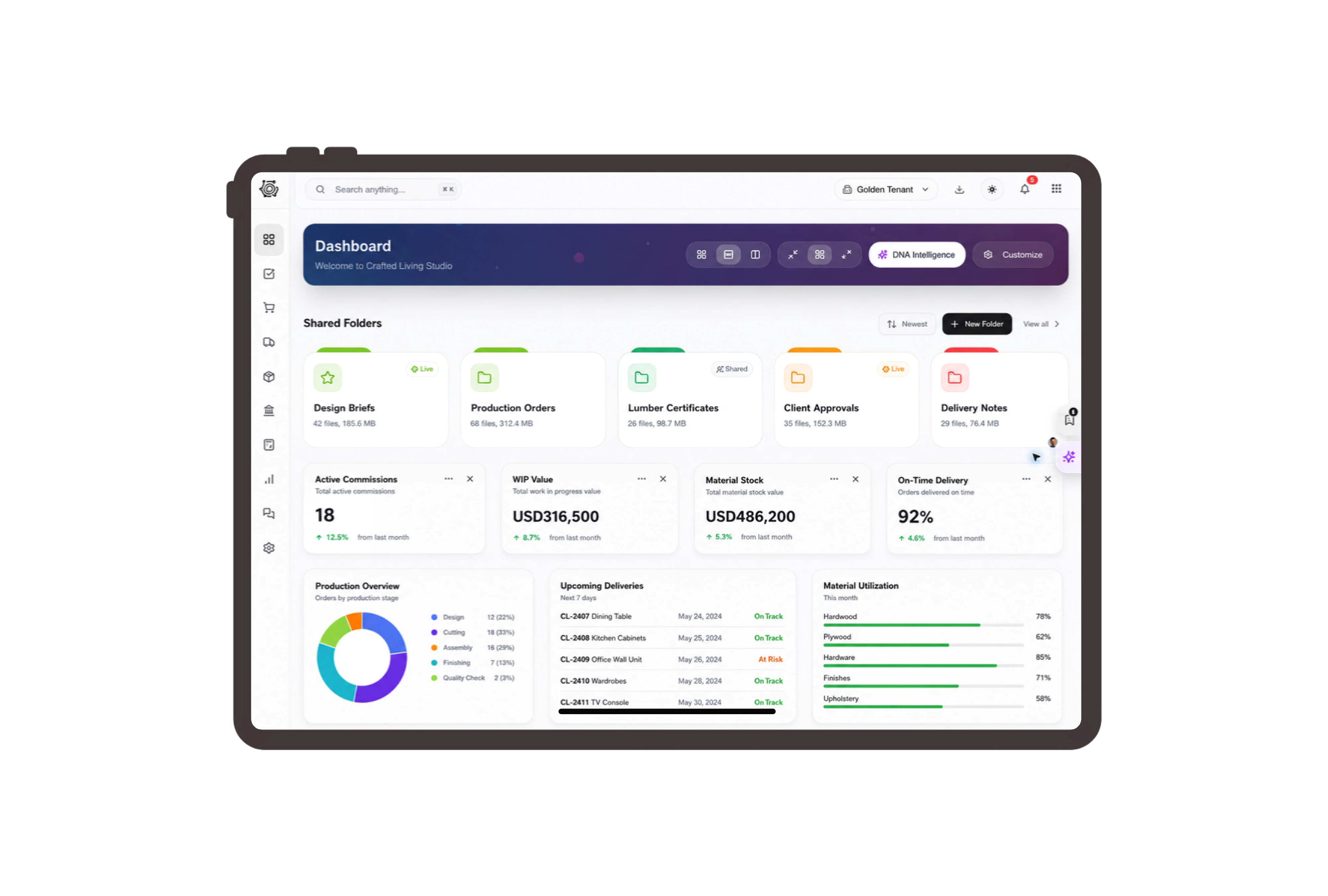
Turn the approved bench into material quantities.
Each reception bench combines an oak frame kit, slate upholstery fabric and a foam-and-fitting set. Review the finished item, component quantities and units in its bill of materials. Adjust the example batch quantity to inspect the corresponding input requirement, giving the team a shared reference when discussing what must be prepared for this customer order.
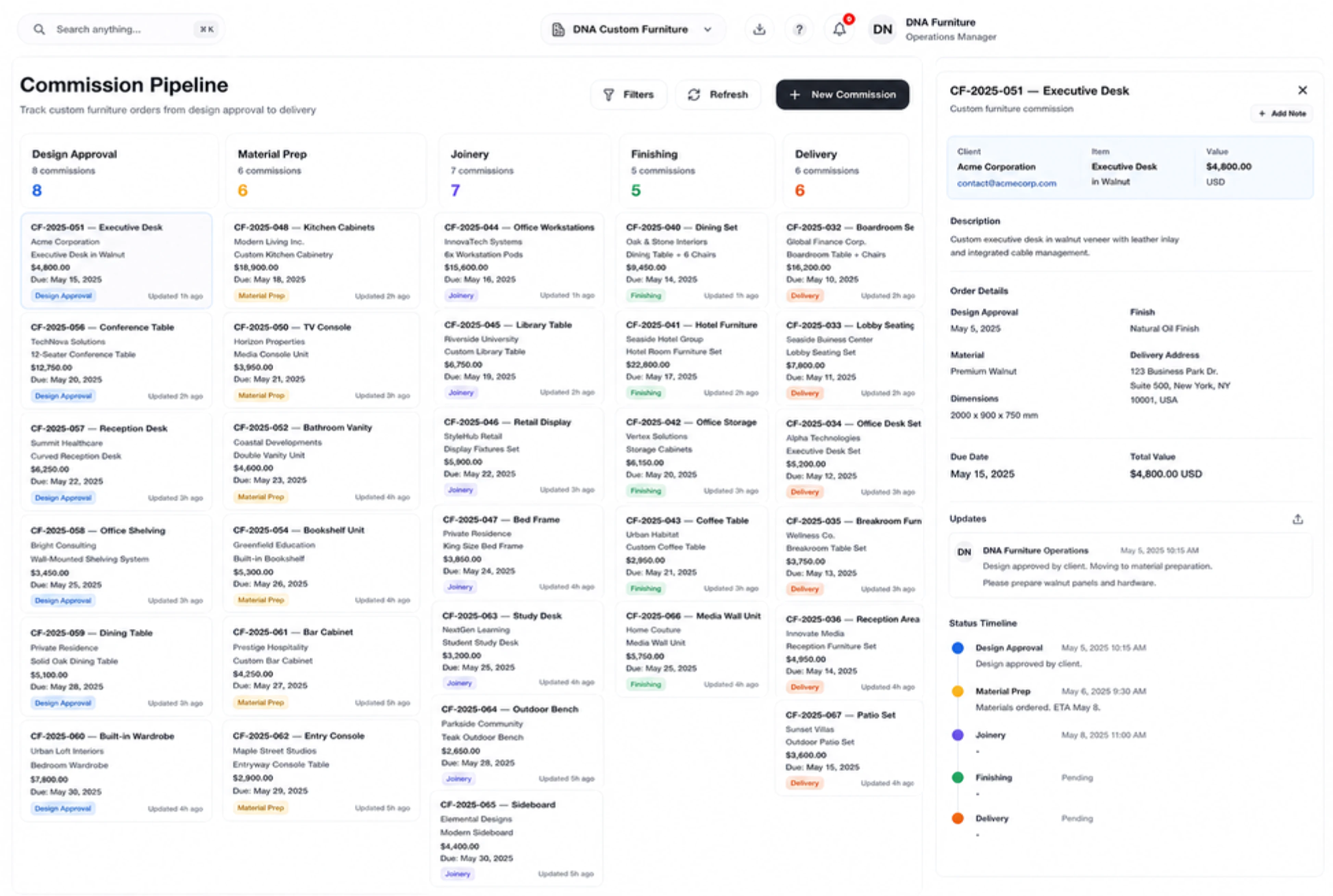
Bring matching materials into the upholstery workshop.
Bring the approved frame kits, fabric and fittings from the materials store into the upholstery workshop. Prepare a stock transfer with source and destination locations, available quantities and the amount to move. Add a reason and remark, then review the pending document with the person responsible for the physical movement and the specified material lines.
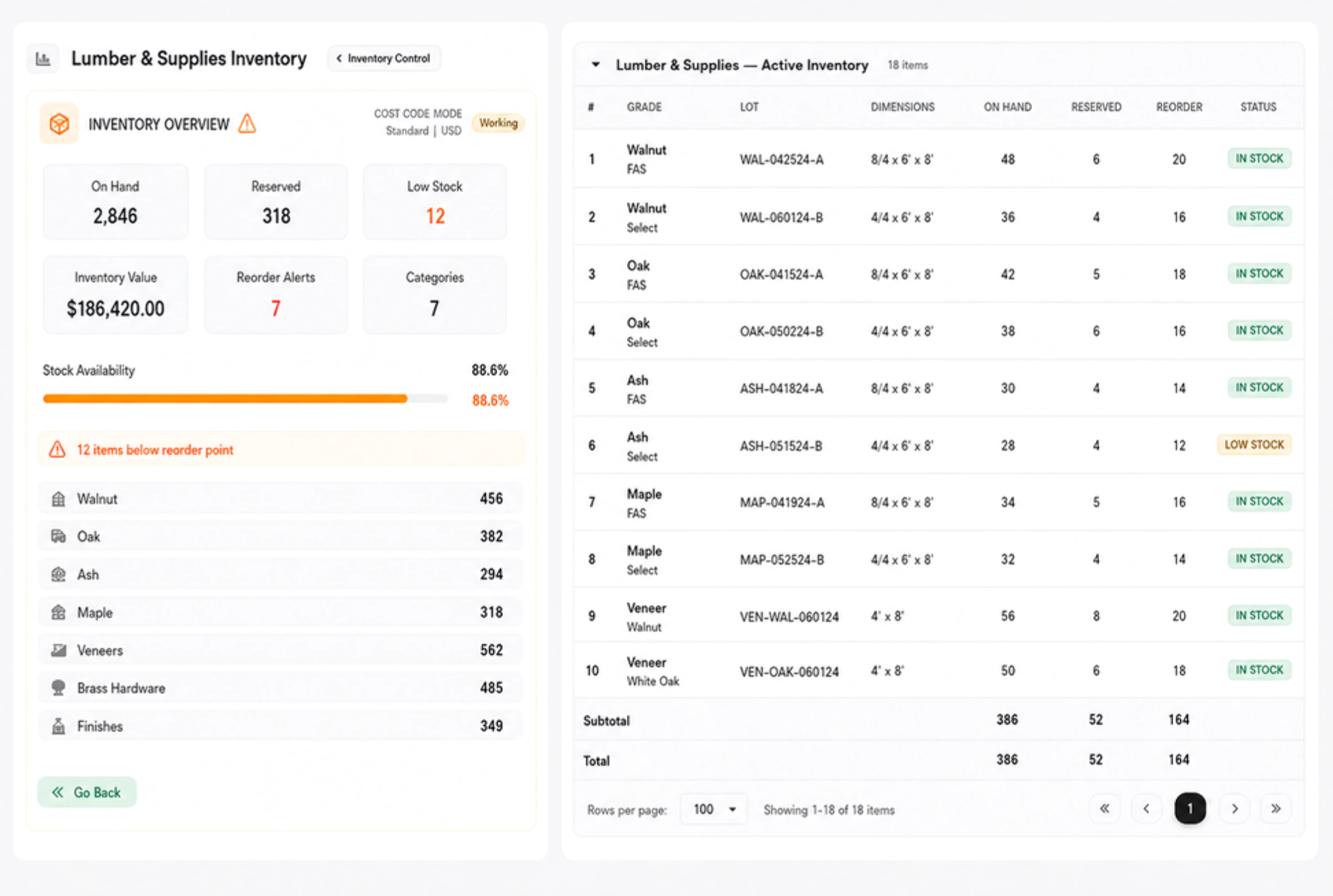
Quote the furniture the customer actually approved.
Describe the upholstered oak bench the customer approved, including its agreed finished quantity. Review the customer, reference, date, finished-product quantity and unit price in the quotation. Line totals make the commercial scope visible when discussing revisions. Keep the description specific enough for the customer and workshop to recognize the same finished product.
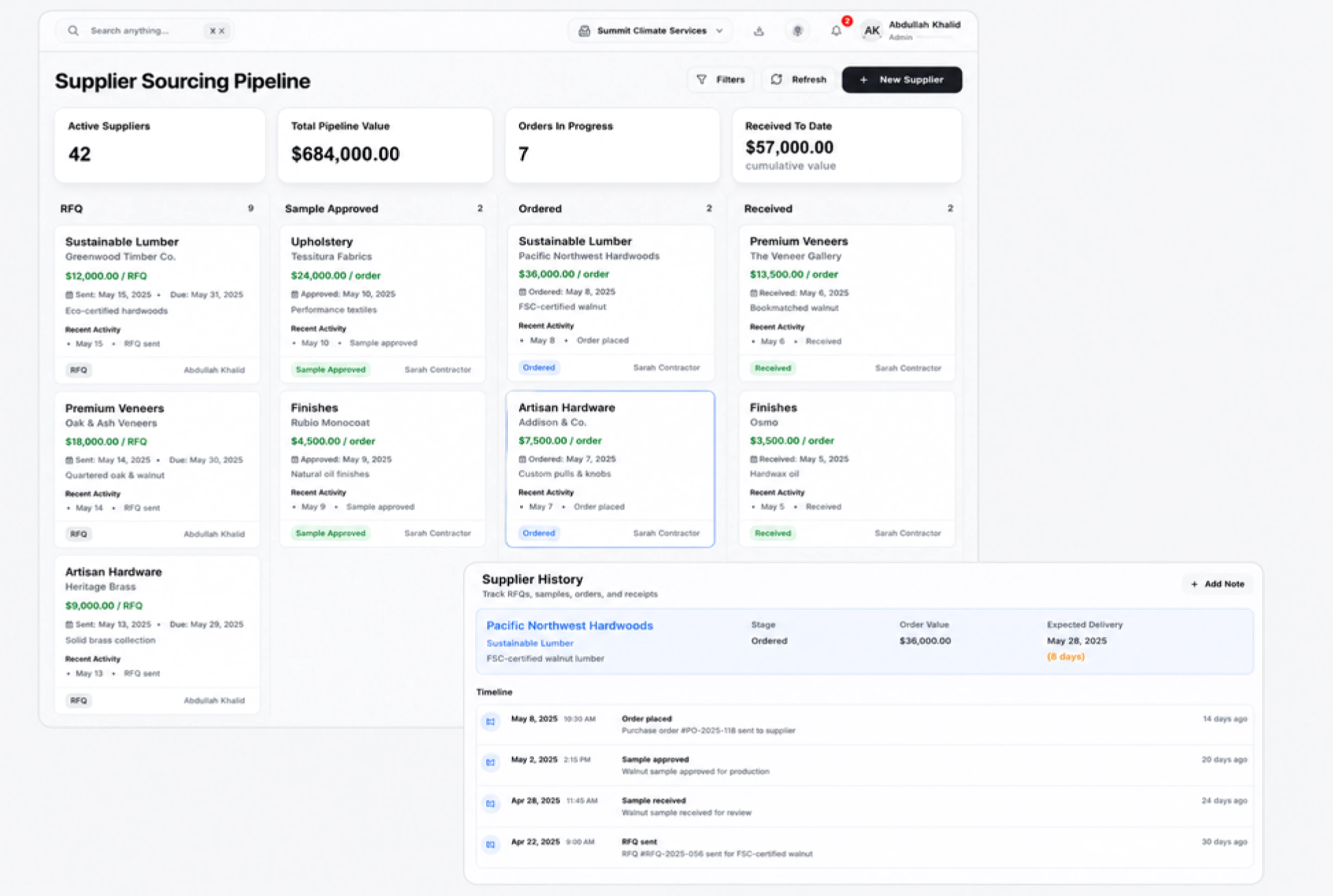
Assign specification checks and final presentation work.
Assign fabric confirmation, the upholstery brief and the finished-bench presentation review to the people doing them. Give each human responsibility an owner, due date and priority. Move tasks between To Do, In Progress and Done as work progresses. The task details preserve the agreed instructions, helping the team follow up the next action with the right person.
Make your next bespoke order easier to follow.
Custom Furniture ERP: Materials & Orders | DNA
- Connect bespoke furniture quotations, component quantities, workshop transfers and assigned preparation tasks in DNA ERP. Explore an upholstered bench order.
- Utilize structured and semi-structured data storage
- Analyze data using graph, spatial, and machine learning engines
- Start with the basic trial using sample data; no set-up required