What's on This Page
- Manufacturing Challenges for SMEs
- Bill of Materials Management
- Work Order Processing
- Shop Floor Tracking
- Quality Control
- Manufacturing Cost Accounting
- DNA ERP Manufacturing Features
- Frequently Asked Questions
Manufacturing Challenges for SMEs
Small and medium manufacturers face unique operational challenges. Unlike large enterprises with dedicated planning departments, SME manufacturers must manage complex operations with limited resources.
Common Pain Points
- Inventory Visibility: Raw materials, WIP, and finished goods scattered across locations
- Production Planning: Balancing customer demand with capacity constraints
- Cost Tracking: Understanding true product costs including labor and overhead
- Quality Management: Maintaining quality standards without excessive bureaucracy
- Delivery Performance: Meeting customer delivery commitments
- Resource Constraints: Limited IT and administrative staff
Why Spreadsheets Fail
Many SME manufacturers rely on spreadsheets for production tracking:
- No real-time visibility into production status
- Manual inventory updates lead to errors
- Cost calculations are approximations at best
- Quality records disconnected from production
- Scaling becomes impossible as volume grows
The Right-Sized Solution
DNA ERP provides enterprise-grade manufacturing capabilities in a package designed for SME adoption:
- Rapid implementation without massive consulting fees
- Intuitive interfaces requiring minimal training
- Flexible configuration to match your processes
- Affordable subscription pricing
Bill of Materials Management
The Bill of Materials (BOM) is the foundation of manufacturing operations. DNA ERP provides comprehensive BOM management.
BOM Structure
- Multi-Level BOMs: Parent-child relationships for complex assemblies
- Component Details: Quantity, unit, scrap factor for each component
- Operations: Manufacturing steps with work center and time standards
- Alternatives: Substitute components for flexibility
- Effectivity Dates: Control when BOM versions are active
BOM Types
- Engineering BOM: Design specification structure
- Manufacturing BOM: Production-optimized structure
- Planning BOM: Percentage-based for product families
- Configurable BOM: Options and variants handling
BOM Maintenance
- Version control with change history
- Engineering change order workflow
- Mass updates across related BOMs
- Where-used inquiry across all BOMs
- BOM comparison tools
Work Order Processing
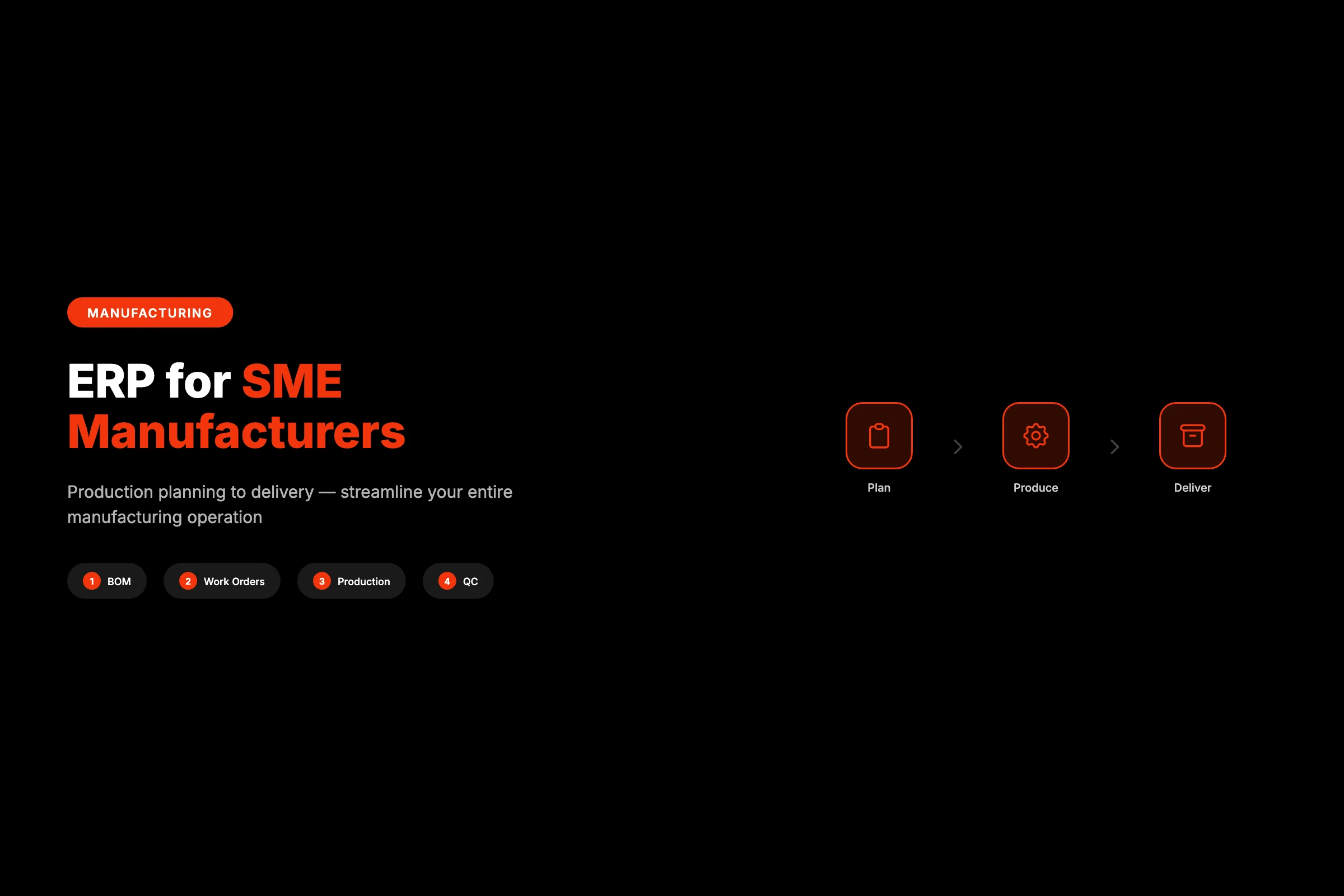
Work orders drive the manufacturing process from planned production to finished goods.
Work Order Creation
- Manual Creation: Direct entry for make-to-order production
- From Sales Order: Automatic generation linked to customer orders
- From Planning: MRP-generated planned orders converted to work orders
- Blanket Orders: Long-running orders for repetitive production
Work Order Details
- Product and quantity to produce
- BOM and routing reference
- Scheduled start and completion dates
- Priority and sequencing
- Special instructions and notes
Work Order Lifecycle
- Planned: Created but not released
- Released: Approved for production, materials allocated
- In Progress: Production actively underway
- Completed: Production finished, pending receipt
- Closed: All transactions complete, variance calculated
Material Management
- Component reservation at release
- Material issue to work order
- Backflushing for repetitive operations
- Substitution handling
- Return of excess materials
Shop Floor Tracking
Real-time visibility into shop floor activities enables better decision-making and customer communication.
Production Tracking
- Operation start and completion recording
- Quantity completed at each operation
- Labor hours by operation and work center
- Machine time tracking
- Scrap and rework recording
Work Center Management
- Work center definition with capacity
- Work center scheduling and loading
- Queue and wait time tracking
- Efficiency and utilization metrics
Data Collection Options
- Manual Entry: Supervisors enter production data
- Barcode Scanning: Operators scan work orders and report
- Kiosk Interface: Shop floor terminals for real-time entry
- Mobile App: Smartphone-based production reporting
Visibility Dashboards
- Work order status at a glance
- Production schedule versus actual
- Work center utilization display
- Exception alerts and notifications
Quality Control
Maintaining quality standards is essential for customer satisfaction and regulatory compliance.
Inspection Points
- Incoming Inspection: Raw material and component quality checks
- In-Process Inspection: Quality gates during production
- Final Inspection: Finished goods verification
- Pre-Shipment: Customer-specific requirements
Quality Features
- Inspection plan definition by item
- Inspection characteristics and tolerances
- Sample size determination
- Result recording with measurements
- Pass/fail disposition
- Non-conformance management
Quality Holds
- Hold inventory pending inspection
- Controlled release after approval
- Quarantine for failed materials
- Disposition workflow for non-conforming items
Quality Analysis
- Defect tracking and trending
- Supplier quality performance
- First-pass yield metrics
- Cost of quality reporting
Manufacturing Cost Accounting
Understanding true product costs is essential for pricing, profitability analysis, and cost reduction initiatives.
Cost Elements
- Material Cost: Raw materials and components consumed
- Direct Labor: Production labor hours valued at labor rates
- Machine Cost: Equipment usage charges
- Overhead: Indirect costs allocated to production
- Subcontracting: Outside processing costs
Costing Methods
- Standard Costing: Predefined costs with variance analysis
- Actual Costing: Real costs accumulated per work order
- Average Costing: Moving average for inventory valuation
Variance Analysis
Standard costing generates variances for management attention:
- Material price variance
- Material usage variance
- Labor rate variance
- Labor efficiency variance
- Overhead spending variance
- Overhead volume variance
Cost Reporting
- Product cost breakdown
- Work order cost summary
- Variance reports by period
- Cost trends over time
- What-if cost simulation
DNA ERP Manufacturing Features
DNA ERP provides comprehensive manufacturing capabilities designed for SME adoption.
Planning
- Master production scheduling
- Material requirements planning (MRP)
- Capacity planning basics
- Demand forecasting integration
Execution
- Work order management
- Shop floor control
- Labor and machine tracking
- Inventory transactions
Quality
- Inspection management
- Non-conformance handling
- Quality holds
- Certificate of analysis
Costing
- Standard and actual costing
- Variance calculation
- Cost roll-up
- WIP valuation
Integration
- Sales order integration
- Purchasing for materials
- Inventory management
- Financial posting
Frequently Asked Questions
Is DNA ERP suitable for process manufacturing?
DNA ERP handles both discrete and process manufacturing. Process features include formula/recipe management, batch sizing, co-products and by-products, and lot traceability.
How do you handle make-to-order versus make-to-stock?
Both production strategies are fully supported. Make-to-order links work orders directly to sales orders. Make-to-stock uses forecasts and reorder points to drive production planning.
Can we track lot and serial numbers through production?
Yes. DNA ERP maintains full traceability from raw material lots through finished goods. Serial numbers can be assigned at any point in production and tracked to customer shipments.
What about subcontracting and outside processing?
Subcontracting is integrated into work order processing. Send materials to subcontractors, track outside operations, receive completed work, and account for subcontractor costs.
Does it integrate with shop floor equipment?
DNA ERP provides APIs for integration with production equipment, PLCs, and IoT devices. Pre-built connectors are available for common equipment, and custom integrations can be developed.
Related Articles
Last updated: May 2026 — DNA ERP Manufacturing module provides comprehensive capabilities for small and medium manufacturers.
.webp)