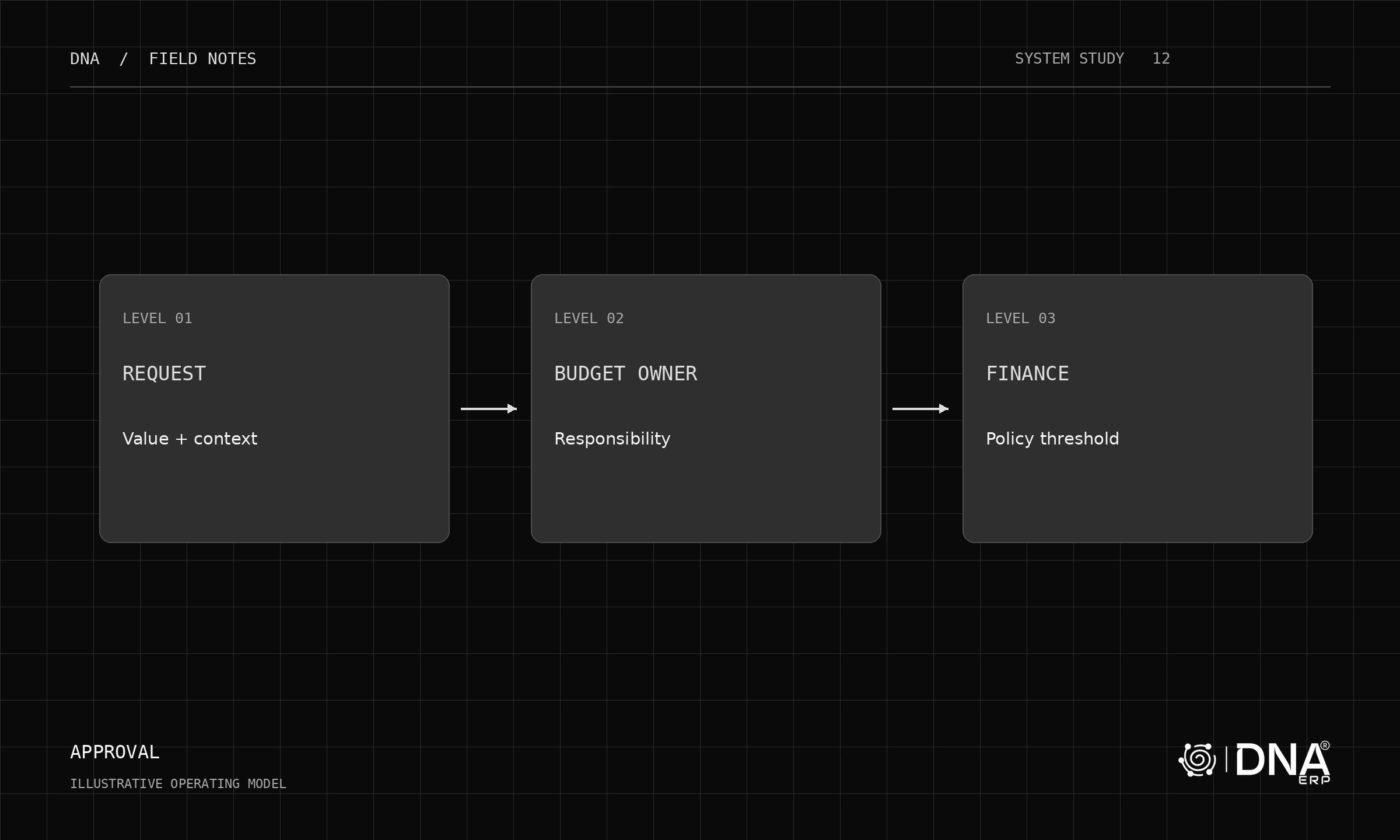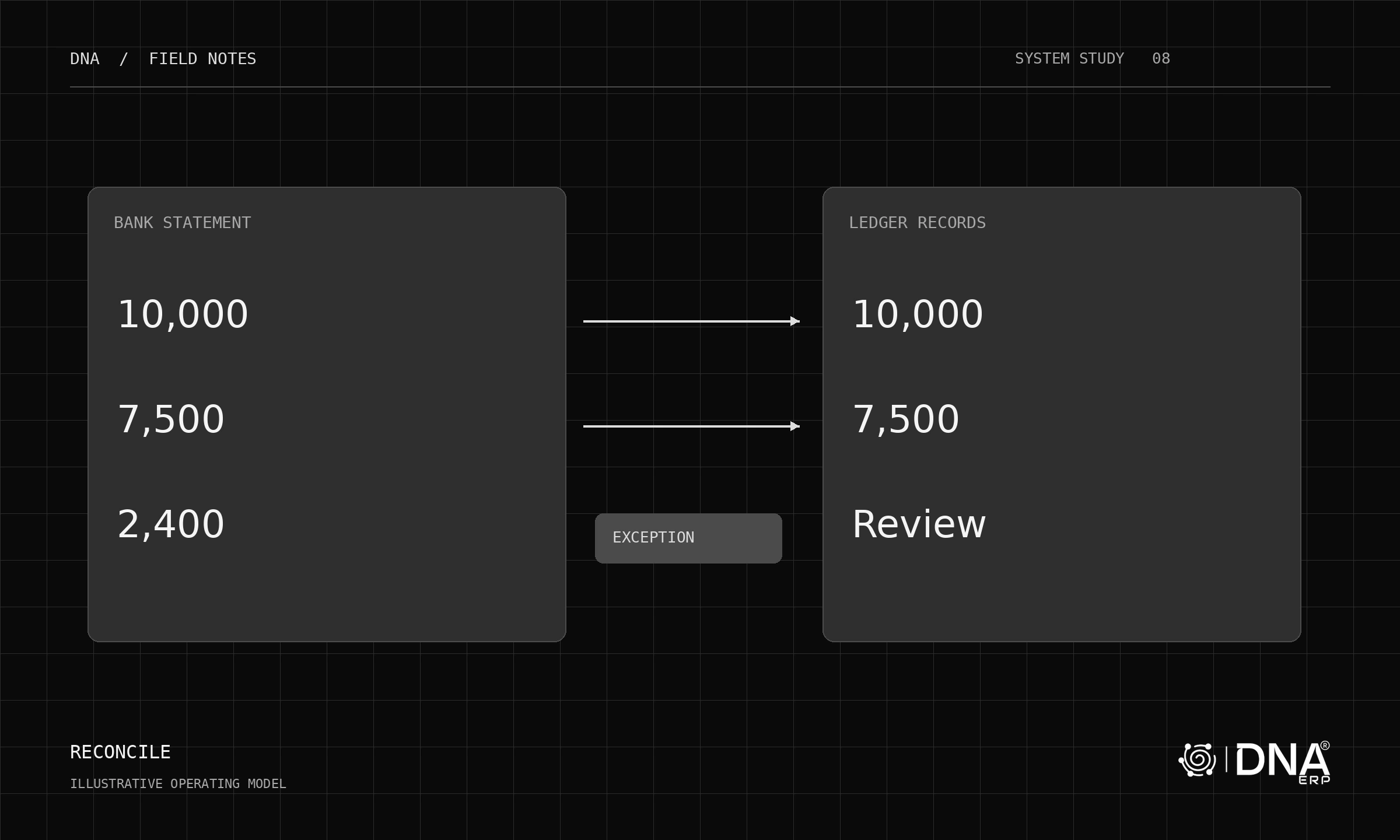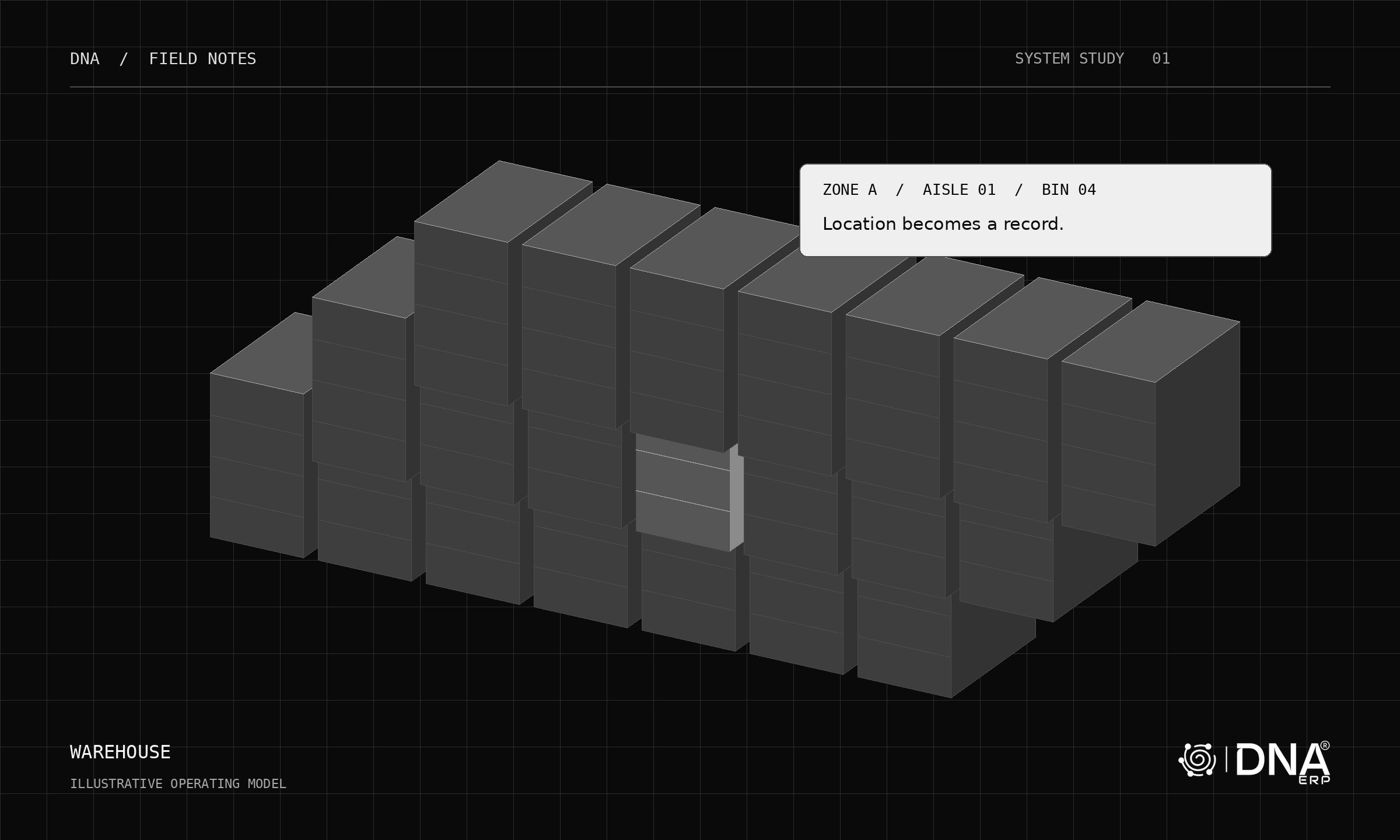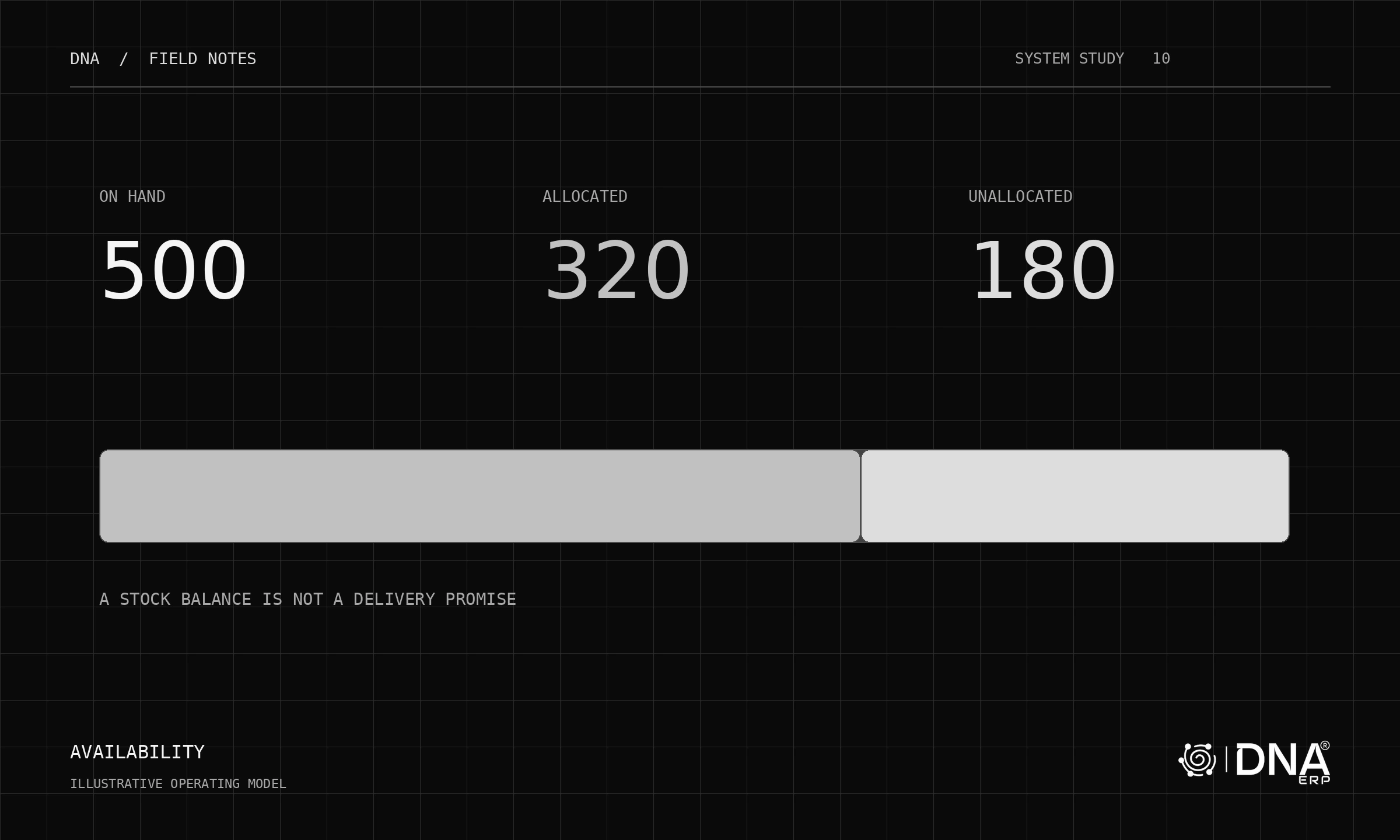
A salesperson sees 500 units and promises delivery. The warehouse knows that some units are already committed. Finance sees a customer balance that may affect the next order. All three views can be correct while the promise is still wrong.
Reliable distribution starts by defining what each stock figure includes. On-hand quantity, allocated stock, expected receipts and stock available for a new order are different measures. The exact calculation must follow your configured workflow.
Test availability at the moment of commitment
Use an illustrative stock position of 500 units with 320 already allocated. Before considering quality holds or other restrictions, only 180 remain unallocated. An expected supplier receipt should be visible as expected, not silently treated as goods already received.
Ask the sales and warehouse teams to walk through the same item simultaneously. Record when the order changes availability and what happens when the quantity is amended or cancelled.
Preserve the order-to-cash chain
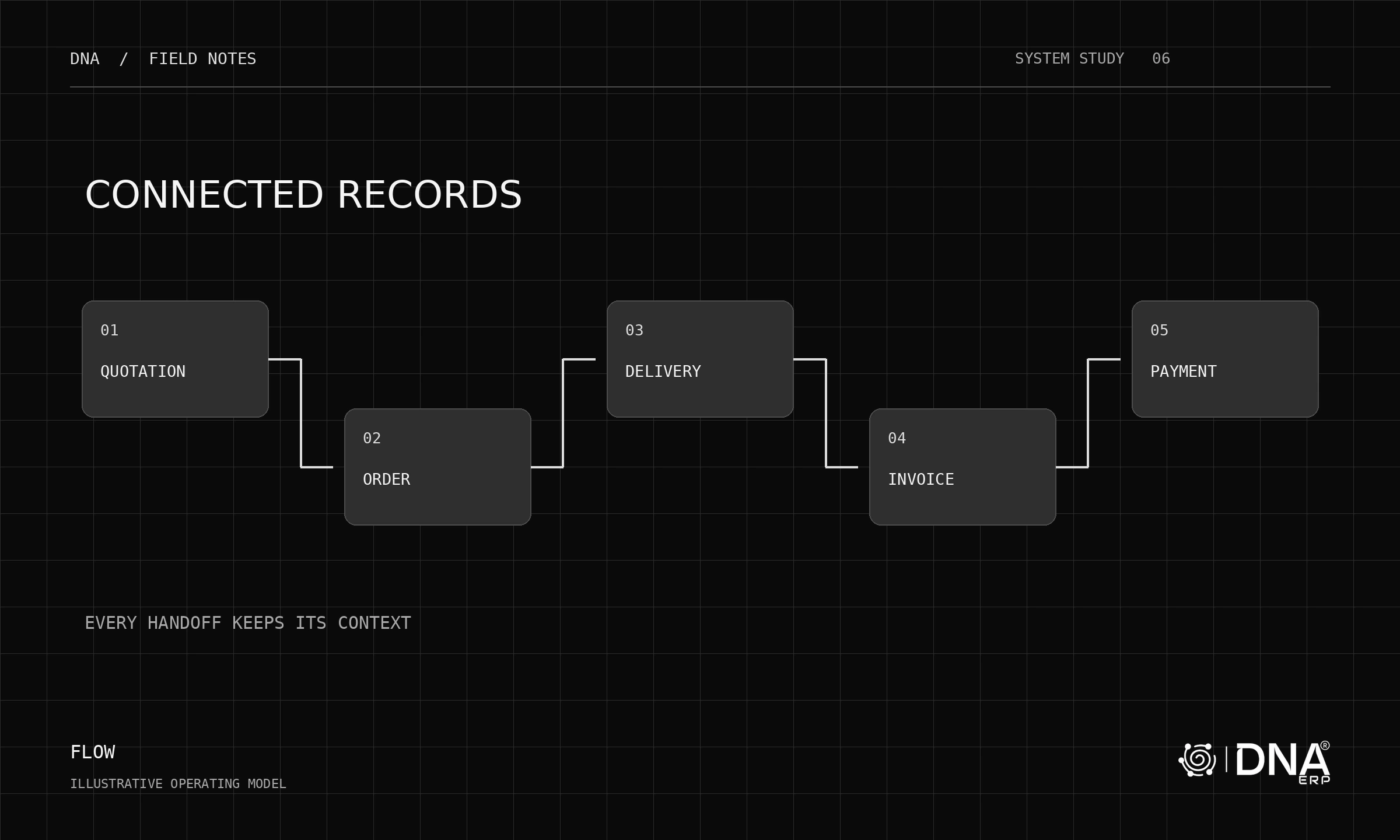
Follow quotation → order → delivery → invoice → payment. Include a partial delivery. If an order contains 100 units and only 60 are delivered, the remaining 40 must stay understandable throughout fulfilment and billing.
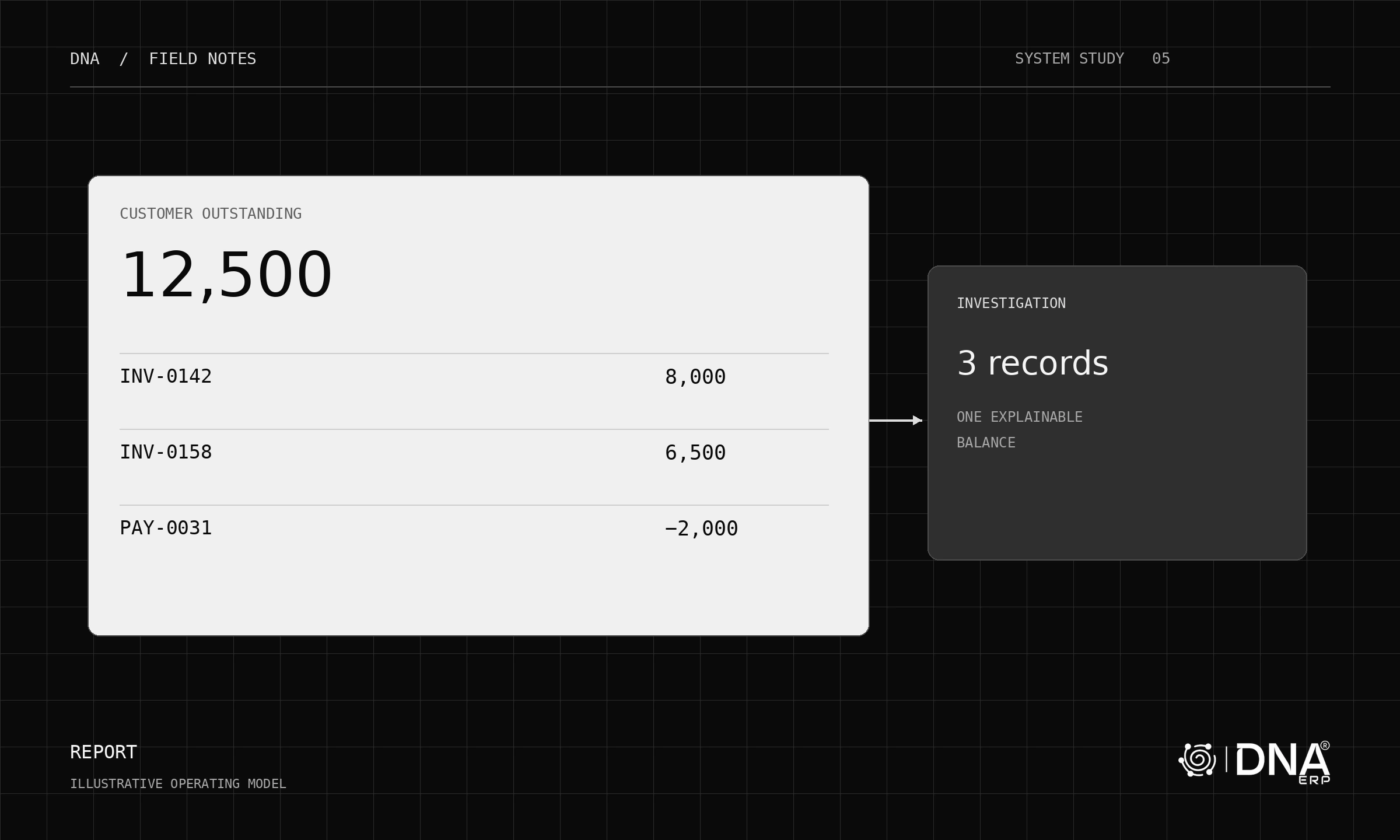
Discounts, returns and credit notes deserve the same attention. Test them using quantities and currencies that expose rounding, and check the final open balance. A document looking correct in isolation is not enough.
Price with context
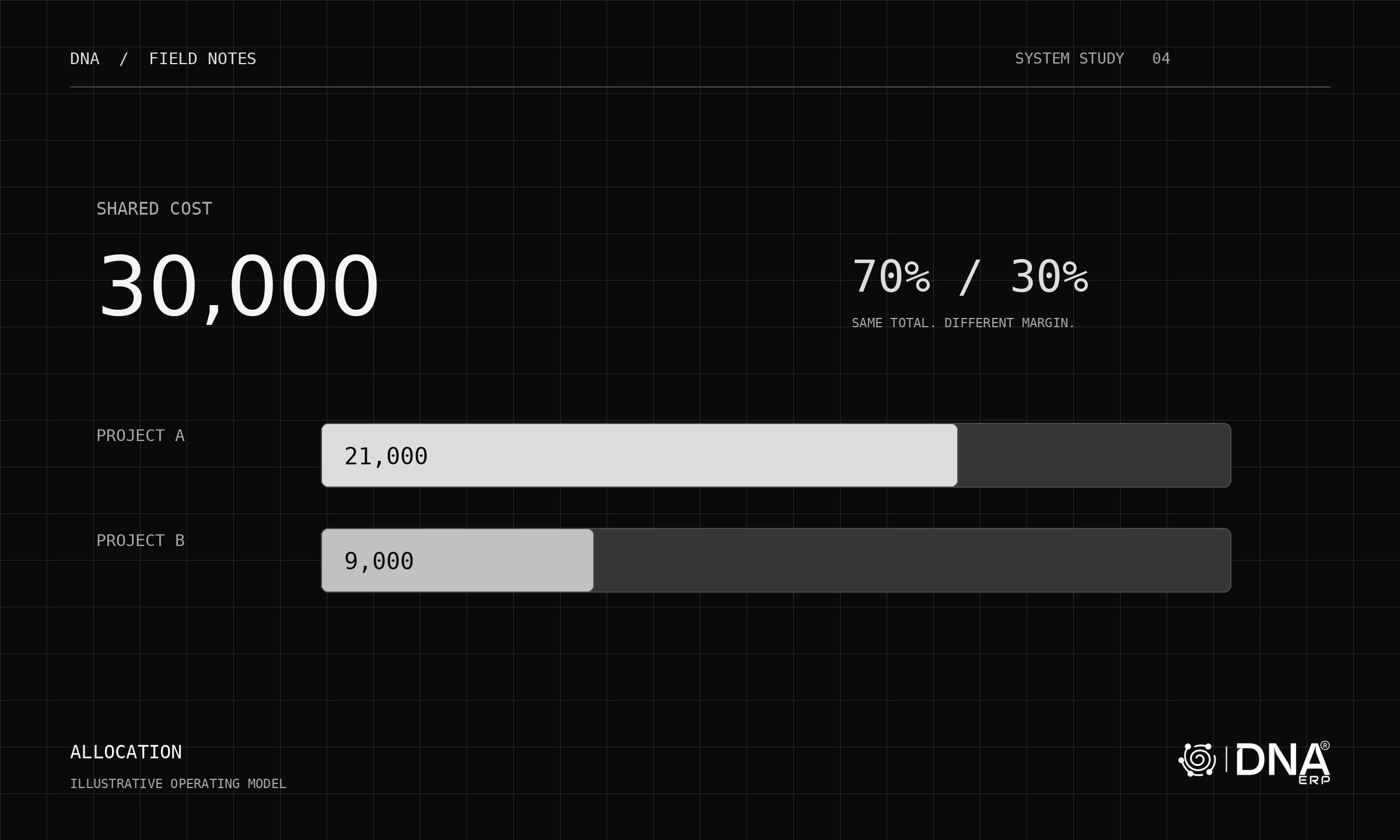
Review customer-specific terms, the applicable price and the cost basis used to assess margin. A discount can be commercially reasonable while still requiring approval. Keep that decision connected to the order and the responsible role.
Segment reports by useful operational questions: overdue deliveries, slow-moving items, customer exposure and margin by product group. Avoid one dashboard that mixes incompatible dates and scopes.
Demonstrate an imperfect day
Explore Sales & CRM, Inventory & Warehouse and Purchase & Procurement together. Use a delayed receipt, a partial delivery and a customer return in the same sample journey.
The goal is a promise that survives ordinary exceptions, with every team working from an explainable position.