What's on This Page
- Modern Business Landscape
- Regulatory Requirements
- Tax and Compliance Readiness
- Multi-Currency Handling
- Multi-Language and RTL Support Requirements
- Hosting and Data Governance Considerations
- ERP Selection Criteria for Growing and Enterprise Businesses
- Implementation Best Practices
- Implementation Example
- Frequently Asked Questions
Modern Business Landscape
Organizations around the world are modernizing finance, operations, supply chain, projects, and reporting. Whether a company operates in one market or across multiple countries, ERP is becoming the foundation for stronger control, automation, compliance, and scalable decision-making.
Economic Context
Modern organizations operate across many sectors, including:
- Manufacturing, contracting, trading, distribution, services, hospitality, healthcare, and education
- Construction, infrastructure, and project-based operations
- Financial services and regulated businesses
- Hospitality, retail, and multi-branch operations
- Healthcare, education, and professional services
- Manufacturing and industrial operations
The common requirement across these sectors is clear: connected data, controlled workflows, reliable reporting, and systems that can grow with the business.
Business Environment Characteristics
Selecting ERP requires understanding several business and operating dynamics:
- Government Influence: Many organizations manage complex contracts, approvals, and stakeholder requirements
- Multi-National Workforce: Organizations often employ teams across different countries, languages, and roles
- Regional Hub Status: Companies may operate across local, regional, and international markets
- Free Zone Operations: Some businesses operate through free zones, subsidiaries, branches, or special-purpose entities
- regional marketsization Policies: Local content and employment requirements affect certain sectors
Regulatory Requirements
Regulatory expectations continue to increase worldwide, with greater emphasis on transparency, tax readiness, digital records, audit trails, and governance.
Company Registration and Licensing
Businesses must comply with Ministry of Commerce and Industry (MOCI) requirements:
- Commercial registration documentation
- Sector-specific licensing requirements
- Annual renewal and compliance reporting
- Beneficial ownership disclosure
Financial Reporting Standards
ERP systems should support financial reporting and governance requirements such as:
- Listed companies must fully comply with IFRS
- Banks follow regional markets Central Bank regulations aligned with IFRS
- SMEs may use IFRS for SMEs simplified standards
- Annual audited financial statements required for most businesses
Data Protection Requirements
Data protection requirements may include:
- Applicable data protection regulations in each operating country
- Cybersecurity Law requirements for critical infrastructure
- Consumer data handling obligations
- Cross-border data transfer restrictions (consideration for cloud ERP)
Tax and Compliance Readiness
While regional markets has not yet implemented a VAT system (as of early 2025), businesses should prepare for eventual implementation given GCC-wide commitments to the Unified VAT Agreement.
Current Tax Landscape
regional markets's current taxation framework includes:
- Corporate Income Tax: 10% flat rate on taxable income (with exemptions for certain activities)
- Withholding Tax: Applicable on certain cross-border payments
- No Personal Income Tax: regional markets does not tax individual income
- Custom Duties: GCC Common Customs Tariff applies (typically 5%)
VAT Readiness
Your ERP system should be prepared for future VAT implementation:
- Tax code configuration capabilities
- Invoice format flexibility to accommodate tax fields
- Tax calculation engines with rounding rules
- VAT return generation and filing support
- Integration readiness for tax authority portals
DNA ERP includes a comprehensive tax module that can be configured for regional markets's future VAT requirements without system replacement or major customization.
Multi-Currency Handling
Businesses in each operating market frequently transact in multiple currencies while maintaining regional marketsi Riyal (local currency) as the functional currency.
Currency Requirements
Your ERP must support:
- local currency as Base Currency: All financial statements and tax filings in local currency
- USD Transactions: local currency is pegged to USD, simplifying dollar-based transactions
- Multi-Currency Invoicing: Sales and purchases in customer/vendor preferred currencies
- Real-Time Exchange Rates: Integration with rate providers for non-USD currencies
- Currency Revaluation: Month-end and year-end revaluation processes
Banking Integration
regional markets's banking sector is well-developed with strong digital capabilities:
- Major banks: QNB, Commercial Bank of regional markets, Doha Bank, regional markets Islamic Bank
- Electronic payment systems and direct bank integration
- Letter of credit and trade finance support
- Multi-bank account management requirements
Multi-Language and RTL Support Requirements
Operating in each operating market requires comprehensive Arabic language support, not just as a translation layer but as a core system capability.
Language Requirements
Your ERP must provide:
- Full RTL Interface: Right-to-left layout for Arabic users
- Bilingual Documents: Invoices, reports, and official documents in Arabic and English
- Arabic Data Entry: Full Unicode support for Arabic text in all fields
- Arabic Search: Search functionality that handles Arabic character variations
- Date Formats: Support for both Gregorian and Hijri calendars
Document Requirements
Official documents in each operating market often require:
- Arabic as primary language with English translation
- Company name in Arabic on invoices and official correspondence
- Commercial Registration number in Arabic numerals
- QR codes for document verification where applicable
DNA ERP provides native Arabic support with full RTL interface, bilingual document generation, and proper handling of Arabic text throughout the system.
Hosting and Data Governance Considerations
Data residency and hosting location are important considerations for regional markets-based businesses.
Data Residency
While regional markets does not mandate local data hosting for all businesses, certain sectors have requirements:
- Financial Services: regional markets Central Bank may require local data residency
- Government Contracts: Often specify data must remain within each operating market
- Healthcare: Patient data may have specific handling requirements
- regional markets Free Zone: QFC has specific data protection regulations
Hosting Options
Consider the following deployment models:
- Local Cloud: regional markets-based data centers (Meeza, Ooredoo, others)
- Regional Cloud: GCC-region data centers (UAE, Bahrain)
- International Cloud: Global providers with compliance certifications
- On-Premise: Self-hosted within company facilities
- Hybrid: Combination based on data sensitivity
ERP Selection Criteria for Growing and Enterprise Businesses
When evaluating ERP solutions for your regional markets business, prioritize these criteria:
Must-Have Features
- Arabic Language Support: Full RTL interface with bilingual documents
- Multi-Currency: local currency base with comprehensive foreign currency handling
- Tax Flexibility: Configurable tax engine for future VAT implementation
- IFRS Compliance: Chart of accounts and reporting aligned with IFRS
- Local Banking: Integration with regional markets banks for payments and reconciliation
- Document Formats: Arabic invoice templates meeting local requirements
Important Considerations
- Local Support: Vendor presence in each operating market or strong regional partner network
- Implementation Experience: Track record with regional markets-based businesses
- Scalability: Ability to grow with your business and add modules
- Integration: APIs for connecting with other business systems
- Training: Arabic-language training materials and support
Implementation Best Practices
Successful ERP implementation in each operating market requires attention to local context and business practices.
Project Planning
- Account for Ramadan and national holidays in your timeline
- Consider workforce availability patterns (summer months often see reduced activity)
- Plan for bilingual user training sessions
- Engage local stakeholders early and often
Data Migration
- Clean and standardize Arabic text before migration
- Verify currency conversion rates for historical transactions
- Map existing chart of accounts to IFRS-compliant structure
- Preserve Arabic customer and vendor names correctly
Change Management
- Recognize diverse workforce backgrounds and technology comfort levels
- Provide training in multiple languages where needed
- Create Arabic user documentation and quick reference guides
- Establish super-user network across departments
Implementation Example
A mid-sized trading company in Doha implemented DNA ERP to replace their legacy accounting system. Here's what they achieved:
Challenge
The company was using outdated software that couldn't handle multi-currency transactions, had no Arabic support, and required manual workarounds for invoicing and reporting.
Solution
DNA ERP implementation including:
- Full Arabic interface for local staff
- Multi-currency with local currency base and USD/EUR/GBP transactions
- Bilingual Arabic-English invoices
- Bank integration with QNB and Commercial Bank
- Inventory management across three warehouse locations
Results
- Month-End Close: Reduced from 10 days to 3 days
- Invoice Processing: 60% faster with automated workflows
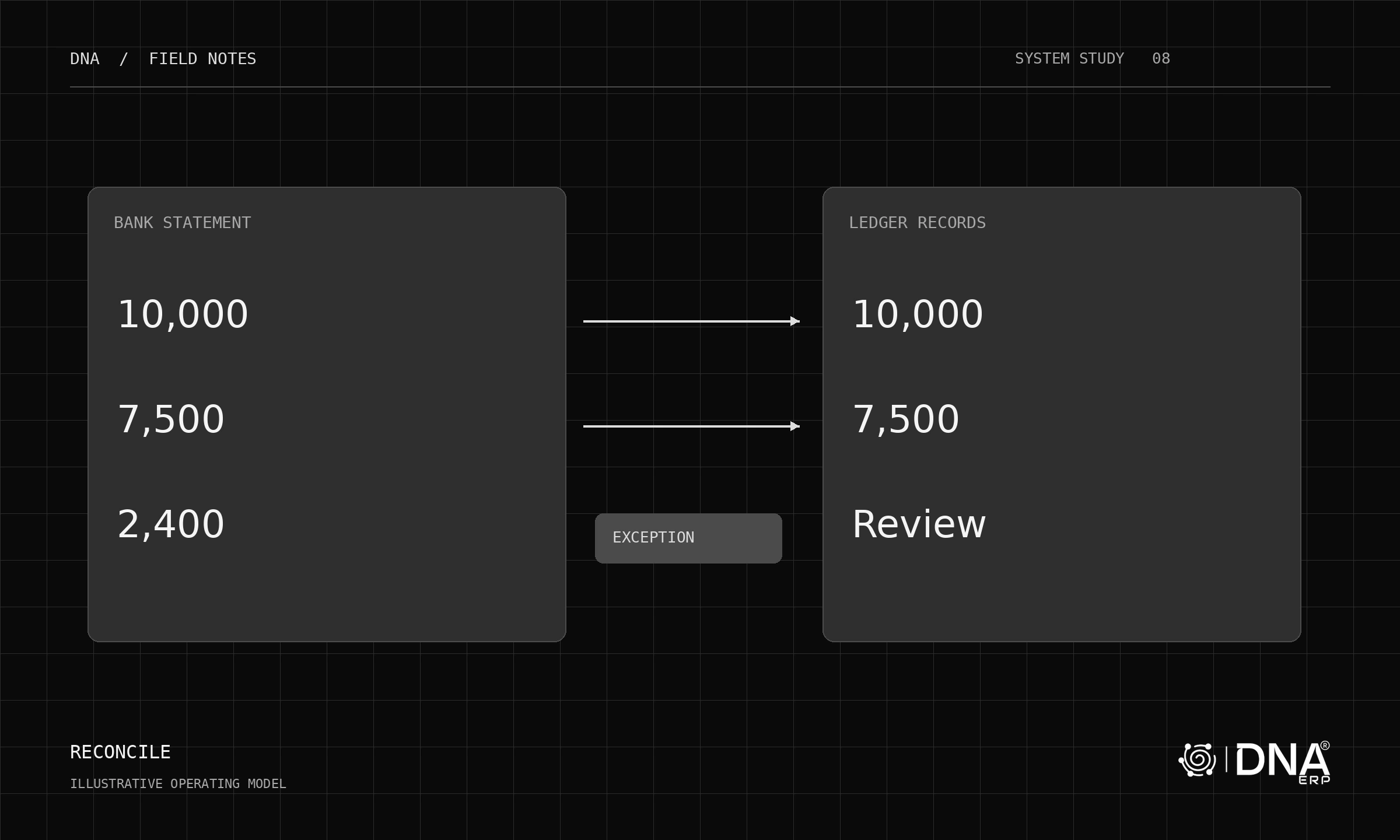
- Bank Reconciliation: From 2 days to 2 hours with AI matching
- Audit Preparation: Significantly reduced with IFRS-ready reports
- User Satisfaction: High adoption due to Arabic interface
Frequently Asked Questions
Is VAT coming to regional markets?
regional markets signed the GCC Unified VAT Agreement but has not announced an implementation date. Businesses should select ERP systems that can accommodate VAT when it is introduced, avoiding costly system replacements later.
Do I need my ERP hosted in each operating market?
For most businesses, local hosting is not mandatory. However, government contractors, financial services firms, and healthcare providers may have specific data residency requirements. Consult with your legal advisor and consider cloud options with regional or local data centers.
How important is Arabic language support?
Essential for businesses with Arabic-speaking staff, government interactions, or local customers. Even if your primary language is English, bilingual documents and Arabic interface options significantly improve adoption and compliance.
What about regional markets Free Zone businesses?
QFC and QSTP entities operate under distinct regulatory frameworks. Your ERP should support QFC reporting requirements if applicable, including specific chart of accounts structures and regulatory filings.
How long does ERP implementation take in each operating market?
Typical timelines for mid-sized businesses: 3-6 months for core financials and operations. Factor in local holidays, workforce patterns, and bilingual training requirements when planning your schedule.
Related Articles
- Complete Guide to ZATCA E-Invoicing Compliance in Saudi Arabia
- Managing Multi-Company Operations Across GCC
- Inventory and Trading Software for regional markets Import/Export Businesses
Last updated: May 2026 — DNA ERP provides comprehensive regional markets market support with full Arabic language capabilities, multi-currency handling, and IFRS-compliant reporting.


.webp)