Move a shared cost from one project to another and the company total stays unchanged. Both project margins change. That is why cost allocation is a management decision with an accounting consequence, not merely a way to complete empty fields.
Choose what the allocation is trying to explain
Shared equipment, premises or support costs may serve several projects. Define the cost pool, the receiving cost centres, the period and a defensible allocation basis. Depending on the cost, that basis might be usage, headcount or another measurable driver.
The basis should explain consumption. A convenient split is not automatically an informative one. Record the assumptions so next month’s reviewer can reproduce the calculation.
Watch the project result move
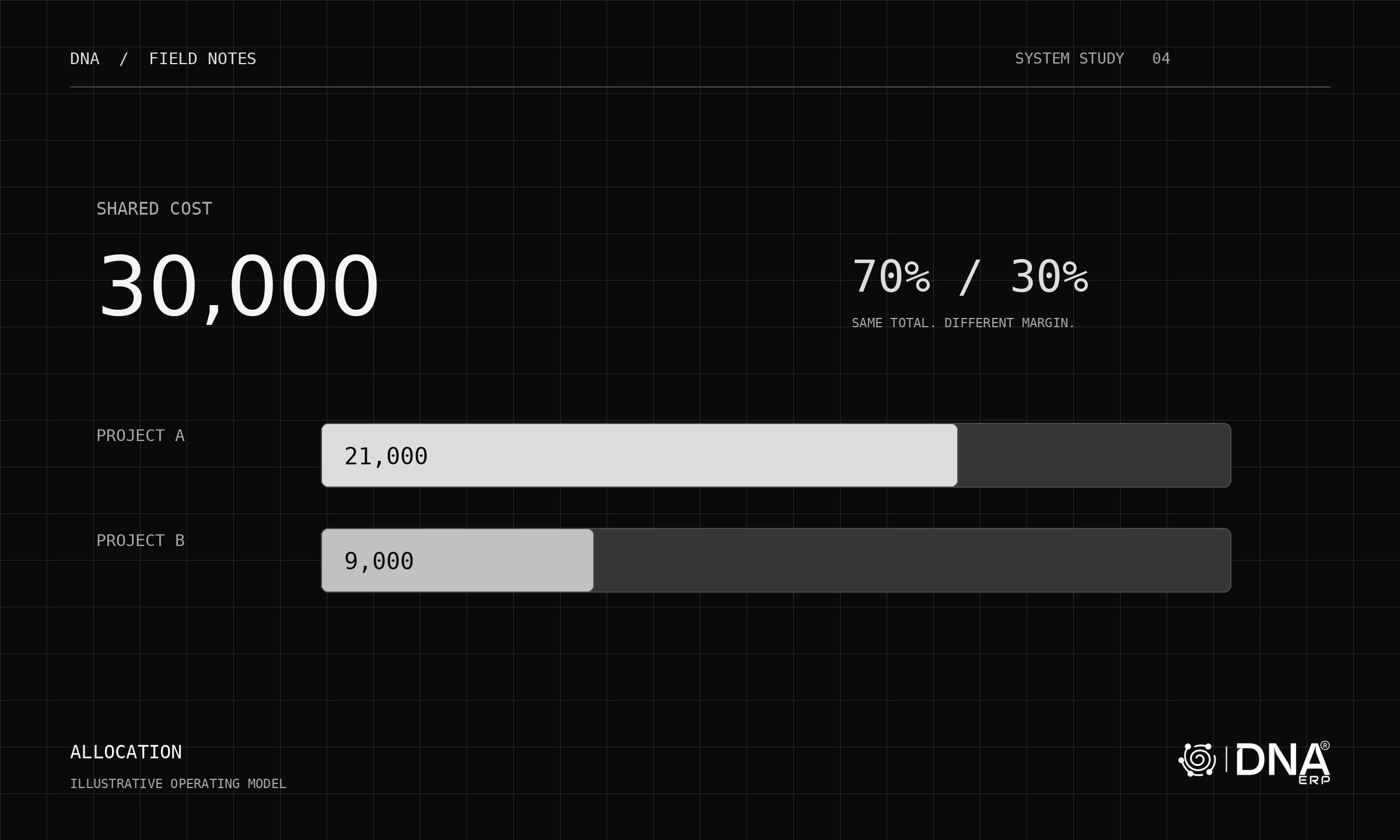
Consider an illustrative 30,000 shared cost. A 50/50 split charges 15,000 to each of two projects. A 70/30 split charges 21,000 and 9,000. Total cost remains 30,000, but one project’s reported margin falls by 6,000 and the other’s rises by the same amount.
The example below lets you change that split. It is an explanation of allocation mathematics, not a recommended allocation policy.
Keep comparisons like for like
Budget and actual need the same period, cost-centre scope and classification. Compare an approved budget version with the relevant actual records. Keep revisions and transfers distinguishable so the team can explain whether a variance changed because spending changed or because the baseline moved.
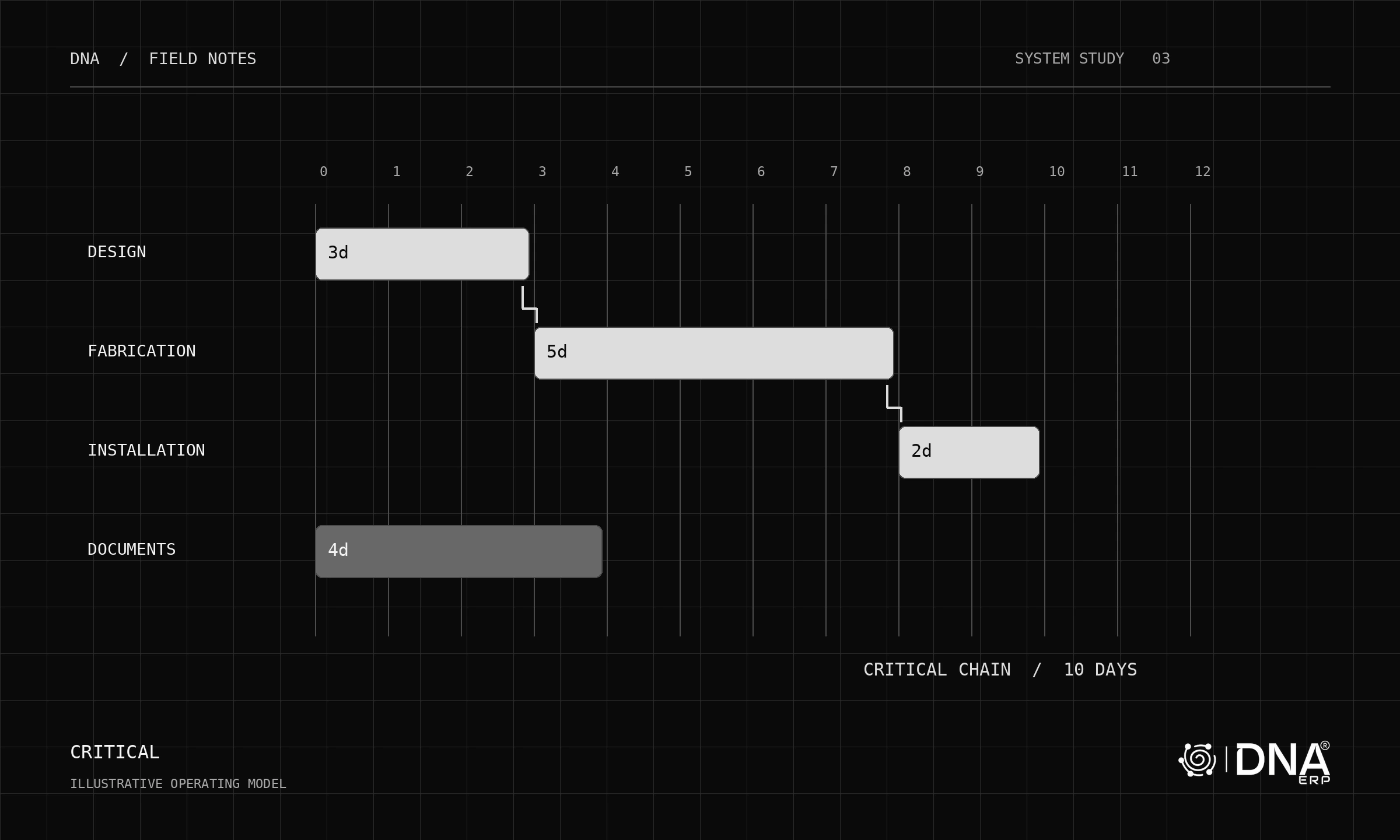
A trend adds another question: is the difference temporary, or is it building over successive periods? Read the timeline alongside work progress. A cost posted earlier than planned can create a temporary variance without changing the final estimate.
Follow the dimensions in DNA
Explore cost centres, cost codes, disciplines and work packages in Budget & Cost Centers. Use the overview, budget-versus-actual, trend, allocation and project timeline views to inspect the same scenario from different angles.
Then use Report Center to inspect the underlying records. The acceptance test is whether a manager can explain the change in margin without exporting several disconnected spreadsheets.