The date money moves does not, by itself, determine the period in which revenue or cost belongs. A payment can cover several future months, and a service can be received before its supplier invoice arrives.
DNA’s Banking & GL module includes scheduling for revenue and cost accrual. Configuration should follow the accounting policy approved by your finance team, with the source document, period allocation and resulting entries kept connected.
Define the period before the recurrence
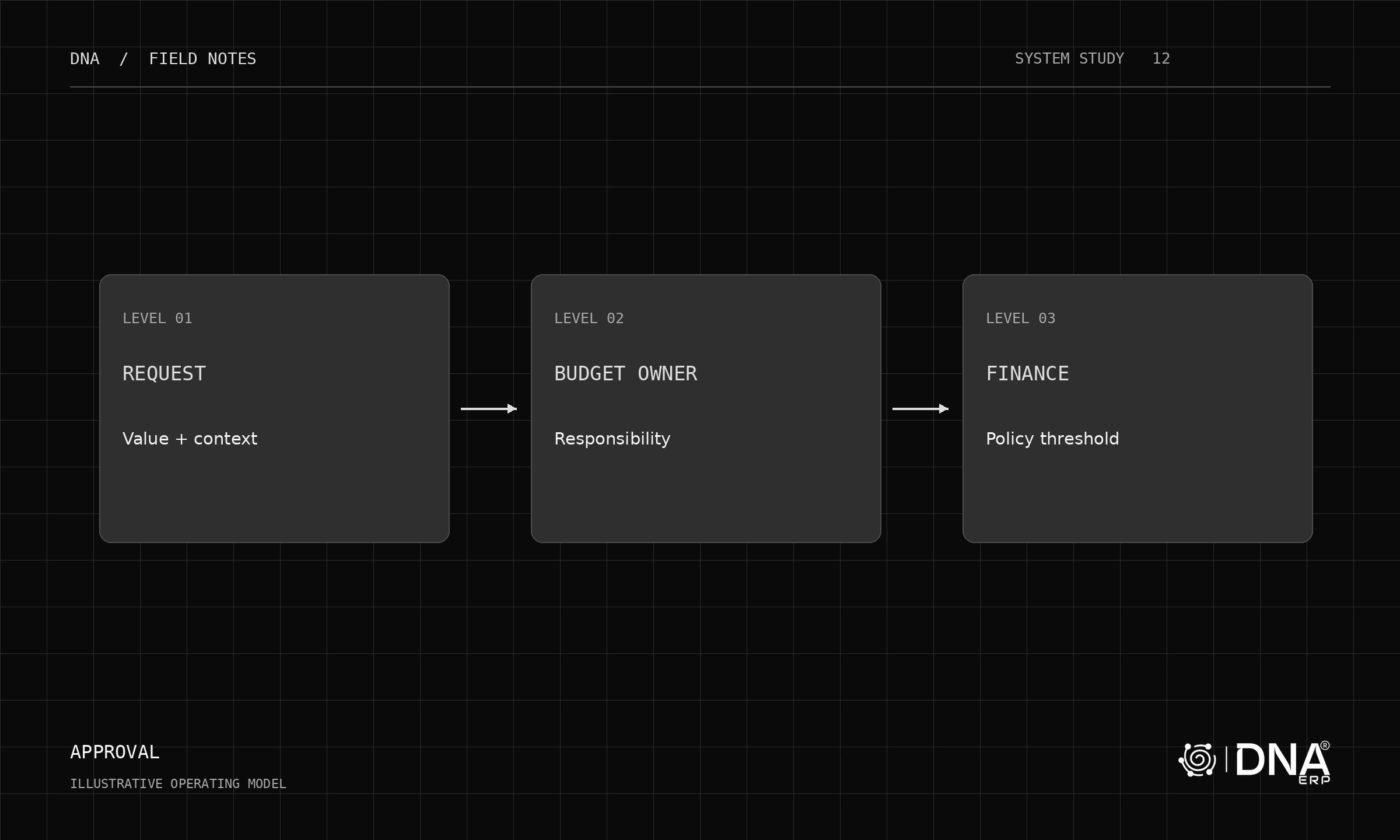
Start with the underlying service or obligation. Record the total, currency, start and end dates, relevant accounts and allocation method. Then decide when the entries should run and who reviews them.
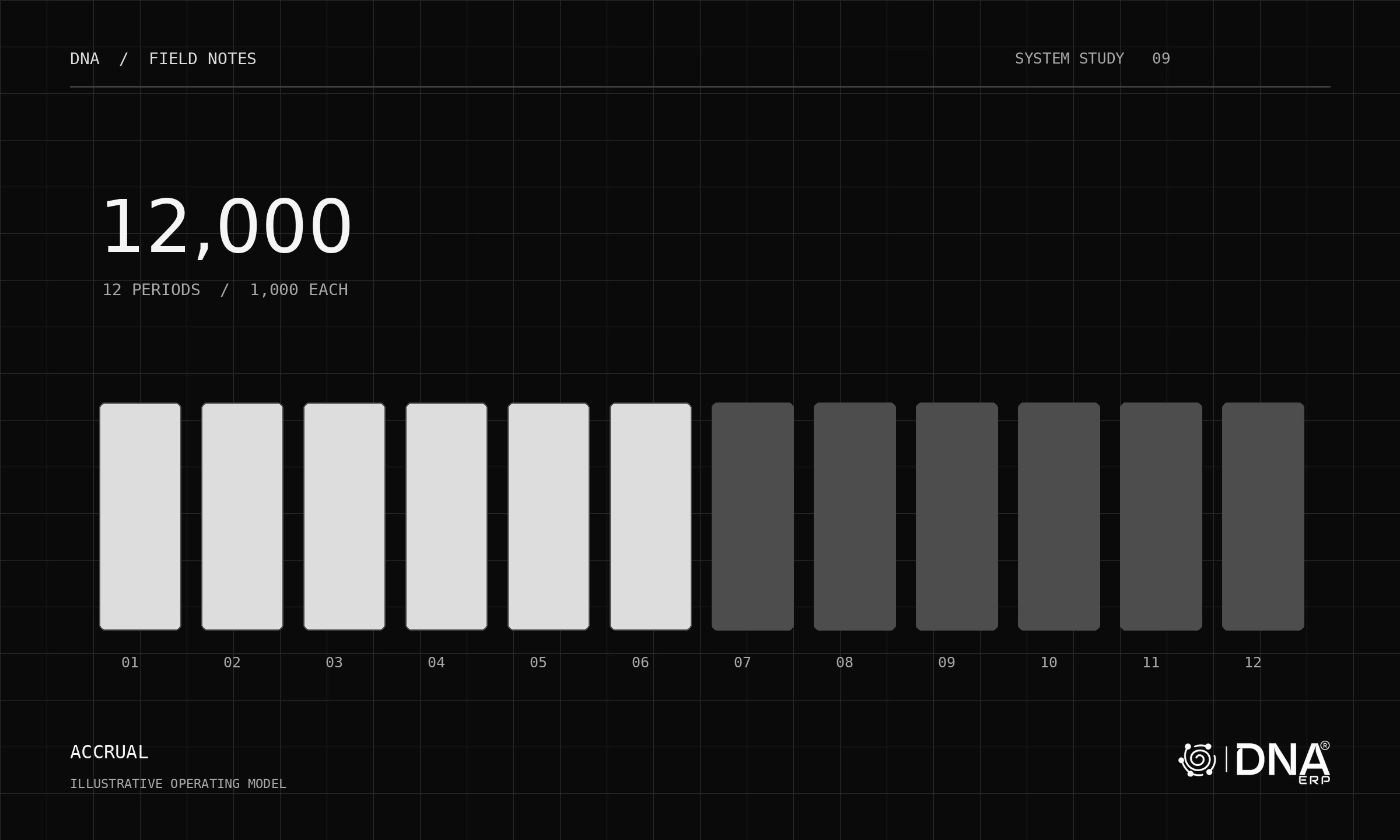
An illustrative 12,000 cost spread equally over twelve full months produces 1,000 per month. That arithmetic does not mean every contract should use equal monthly recognition. Partial periods, milestones and other contractual facts can require different treatment.
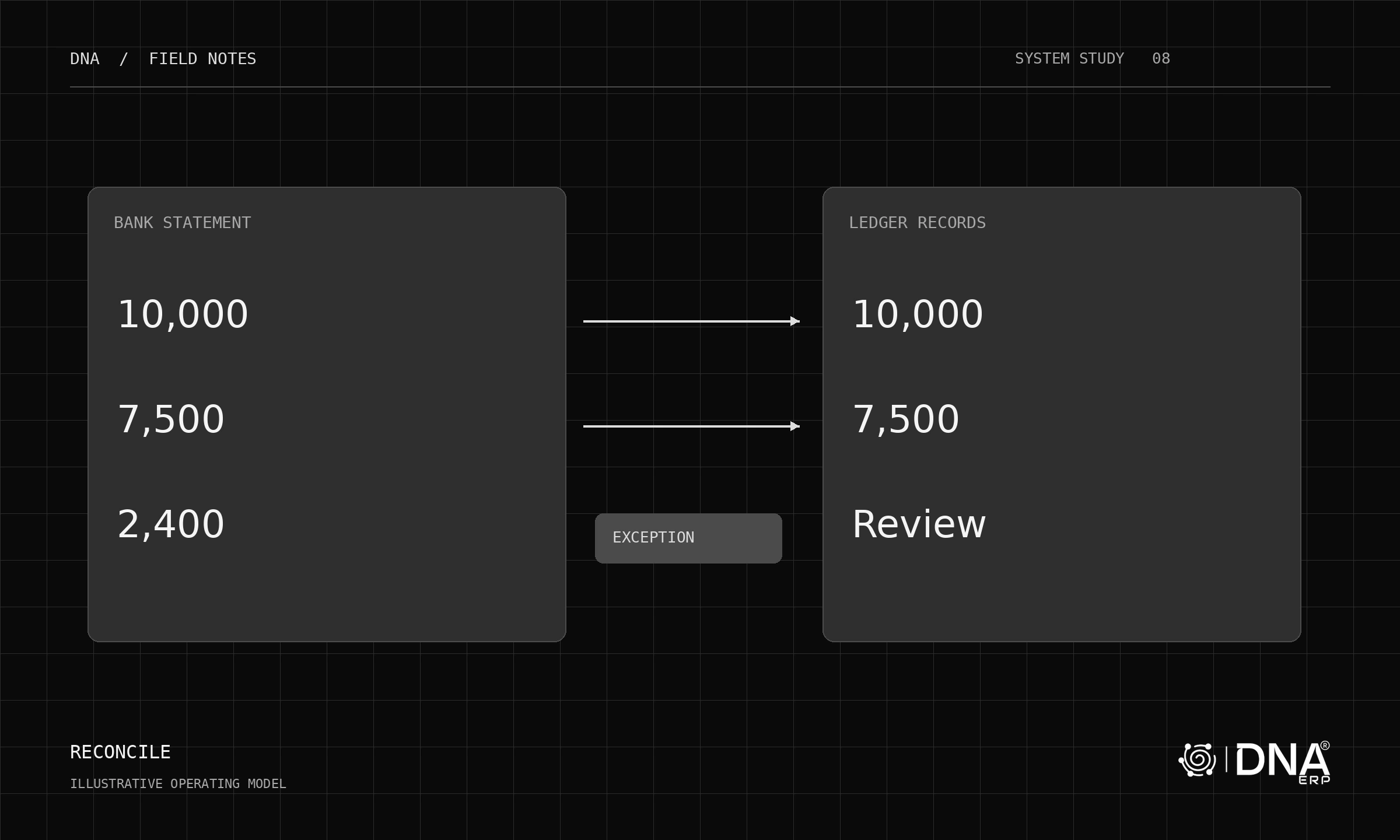
Reconcile the schedule to its source
The allocated amounts should add back to the source total, subject to the approved treatment. Check the final period for rounding residuals. Keep the original document reference visible so the schedule can be explained without searching email archives.
Distinguish planned, posted and remaining entries. A schedule can be configured correctly while a posting fails or a period is unavailable. Review execution results, not just the setup screen.
Decide what happens when circumstances change
Test a revised amount, an early termination and a missed run in a non-production scenario. Ask how changes affect already posted periods and how the remaining balance is handled. Do not assume that editing a schedule should rewrite historical entries.
Agree ownership of exceptions and period-close checks. Scheduling reduces repeated work, but the financial interpretation still needs an accountable owner.
Review it in DNA
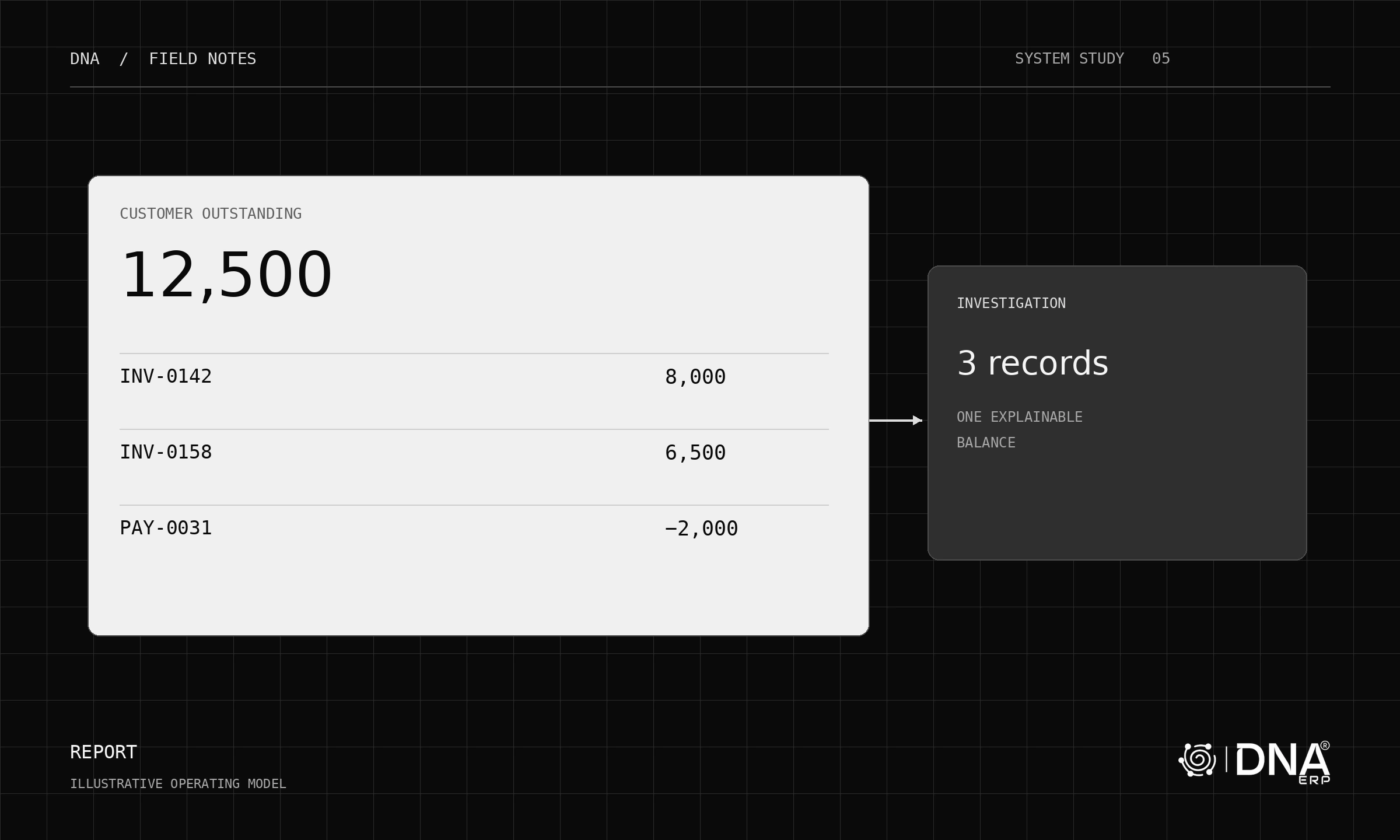
Explore Banking & GL, then inspect the resulting records through Report Center. Use a sample schedule that crosses a year end and verify the total, posting dates and remaining amount.
This is a workflow guide, not a determination of recognition policy for a particular contract.